The Biochemical Shift: Why True Self-Care is a Discipline, Not a Luxury for Women 40 and Beyond
If you are navigating your 40s, 50s, or 60s, you’ve likely noticed that the strategies which served you in your 30s just don't seem to land the same way anymore. Perhaps you’re feeling a bit more frayed at the edges, your sleep has become a game of hide-and-seek, or your emotional resilience feels like it’s being tested daily.
As a mental health practitioner with over 20 years of experience and as a woman who has navigated the complexities of the early onset of biochemical shift in my late 30s, combined with CRPS and vitiligo, I want to tell you something vital.
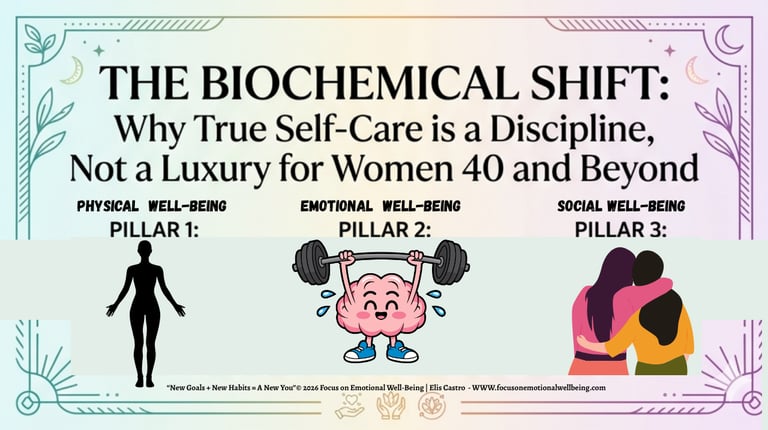
You aren't "falling apart." You are experiencing a profound Biochemical Shift, your body has changed, and you need to make intentional and consistent micro-changes in all three pillars of Holistic Well-being, one micro-babit at a time with intentionality and consistency, just like I have done to manage all symptoms and live my life in my middle 40s with vitality.
I speak to you from the 'front lines' of this Biochemical shift long journey. My perspective is dual-layered professional and personal: I am a Mental Health Practitioner specialised in the intersection of neuroscience and behaviour, focusing on how intentional habits spark neuroplasticity and influence epigenetics. In my darkest moments, facing the dual challenge of chronic pain and hormonal transition, I had to choose a different way of living and literally do what I had always studied and guided my patients. It didn't happen overnight; it was won through the quiet power of micro-habits. Today, I am living proof that it is never too late to influence your biology. Even when the transition feels like a battlefield, you have the power to boost your brain’s resilience and command your own long-term vitality.
At Focus on Emotional Well-Being, Elis and I often discuss how this transition is frequently misunderstood as a "crisis." In reality, it is an invitation to upgrade your internal operating system.
Understanding the "Biochemical Shift"
When we hit 40, our internal chemistry begins a significant transformation. This isn't just about hot flashes; it’s about the declining levels of estrogen and progesterone and their direct impact on our brain chemistry and nervous system.
Research from the British Menopause Society and Harvard Health indicates that estrogen plays a neuroprotective role. When it fluctuates, it affects our neurotransmitters—like serotonin (our mood stabiliser) and GABA (our "calm" chemical). This is why "self-care" for women our age cannot just be a bubble bath once a month. It must be a daily, self-disciplined response to these changing needs.
From Radical Overhaul to Micro-Habits
Many wellness programs suggest a "total life makeover." But as someone who manages chronic pain and a busy household, I know that radical overhauls are the fastest route to burnout.
The secret to navigating this shift lies in consistent, intentional micro-behaviour changes. My mantra is: Hormones Change Our Bodies. Habits Change Our Epigenetics. While we cannot stop the natural decline of certain hormones, we can influence how our genes are expressed through our daily choices. This is the essence of holistic wellness—addressing the physical, emotional, and social pillars of our lives one small step at a time.
Three Pillars of the Holistic Wellness Response
1. The Physical: Stabilising the Foundation
Our bodies become more sensitive to cortisol (the stress hormone) during the Biochemical Shift. High-intensity workouts that used to feel great might now leave you exhausted.
The Micro-Habit: Incorporate 10 minutes of resistance training or a brisk walk in nature. This helps maintain bone density and insulin sensitivity without spiking cortisol.
2. The Emotional: Reclaiming Your Narrative
Perimenopause and menopause can trigger "brain fog" and heightened anxiety. This isn't "all in your head"—it’s in your hormones.
The Micro-Habit: Practice "Emotional Pacing." Set aside five minutes each morning to check in with your internal weather. Are you feeling "stormy" or "overcast"? Acknowledging the feeling reduces its power over your day.
3. The Social: Connection as Medicine
Isolation is a significant risk factor for women in midlife, especially as roles change (empty nesting or caring for ageing parents).
The Micro-Habit: Schedule one "connection point" a week—a phone call, a walk with a friend, or a community group. Social support is a biological necessity for nervous system regulation.
Turning Pain into Power
I have spent years turning my own pain into power, learning to live intentionally despite the challenges of vitiligo and CRPS. I want that same clarity for you. You deserve to understand exactly how your body is changing so you can meet those changes with grace rather than frustration.
True self-care is the discipline of saying "yes" to your needs before you reach a point of depletion. It is the understanding that your well-being is the foundation upon which the rest of your life is built.
References & Evidence-Based Resources
British Menopause Society (BMS): Post-reproductive health and the impact of estrogen on mood. [thebms.org.uk]
Harvard Health Publishing: Menopause and Mental Health: The Hormone-Mood Connection. [health.harvard.edu]
National Institutes of Health (NIH): Epigenetics and Lifestyle: How habits influence gene expression. [nih.gov]
NICE Guidelines (UK): Menopause: Diagnosis and Management (NG23). [nice.org.uk]
Mayo Clinic: Midlife transitions and chronic pain management in women. [mayoclinic.org]
Endocrine Society: The role of progesterone and GABA in anxiety during perimenopause. [endocrine.org]
BLOG
Focus on Emotional Well-Being: Holistic Wellness for Modern Woman 40+ © 2026
Created by Elis Castro (UK/USA Mental Health Practitioner and Specialist in Emotional Well-Being)
⚠️ Professional Disclaimer
I am a mental health professional specialising in Emotional Well-being, but I am not your doctor. Before starting or stopping any supplementation or medication, you must consult your physician or nutritionist to undergo blood tests. Supplements can interact with medications (such as antidepressants or blood thinners). This information does not replace professional medical advice. Always seek the guidance of a physician or qualified nutritionist prior to beginning supplementation.

