Investing in Our Human Connections: Building a Foundation for Resilience
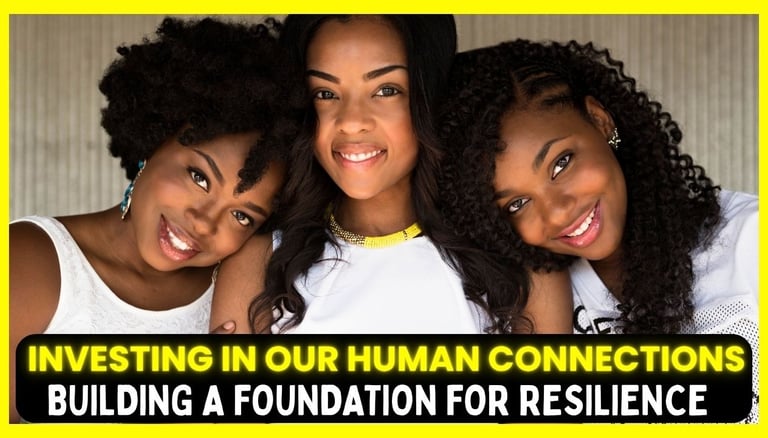

Hello, incredible woman! Welcome to our site, Focus on Emotional Well-being. I am Elis, a mental health practitioner specialising in emotional well-being who is in partial remission of a chronic pain condition, Complex Regional Pain Syndrome (CRPS). In this blog, we will explore, based on the profound insights from Dr. Robert Waldinger's work on human connections, how truly investing in these bonds builds a resilient foundation. Always focusing on achieving greater emotional well-being while living a life with, at times, difficult circumstances. Focus on your emotional well-being is a daily investment which will pay dividends in the short and long term.
Investing in Our Human Connections: Building a Foundation for Resilience
In a world that constantly bombards us with messages about what constitutes a "good life" – often pointing towards wealth, fame, or endless accolades – it's easy to get lost. We hustle, we strive, we build careers, and we manage the complex, beautiful chaos of parenting. But what if the true secret to enduring happiness, robust health, and profound resilience lies not in what we achieve or accumulate, but in the quality of our relationships?
Dr. Robert Waldinger, director of the Harvard Study of Adult Development – arguably the longest study on happiness ever conducted – has uncovered a truth that is both simple and revolutionary: Good relationships keep us healthier and happier. Period. This isn't some fluffy self-help platitude. This is 80 years of rigorous scientific data, following thousands of lives from adolescence into old age, revealing the paramount importance of human connection.
As someone who navigates the often-unpredictable terrain of chronic pain, like my journey with CRPS, I've seen firsthand how our nervous system can either be a source of constant distress or, with the proper support, an incredible pathway to healing and adaptation. The wisdom from Waldinger’s work resonates deeply with my lived experience: isolation exacerbates suffering, while genuine connection acts as a powerful buffer, a protective shield against life's inevitable blows. It's not about being "strong" alone; it's about being strong together.
The Uncomfortable Truth: Why Relationships Are the Root Cause of Resilience
We are wired for connection. Yet, we live in an increasingly disconnected world. We spend more time scrolling than genuinely conversing, more time curating an online persona than nurturing real-life bonds. We tell ourselves we're "too busy," "too tired," or that digital interactions meet our social needs. These are excuses, dear woman, and while I understand the pull of exhaustion and the demands on your time, I am also here to tell you that these excuses are costing you dearly.
The Harvard study unequivocally demonstrates that individuals who are more socially connected to their family, friends, and community are happier, physically healthier, and live longer than those who are less well-connected. Loneliness, conversely, is toxic. It's a root cause of diminished health, accelerated decline, and reduced lifespan. It impacts your physical well-being at a cellular level, contributing to increased inflammation and stress.
Resilience, in its purest form, isn't about avoiding hardship. It's about your capacity to navigate it, to bend without breaking, and to bounce back stronger. And what strengthens that capacity more than anything else? Your human connections. When life throws its inevitable curveballs – a child's challenging phase, a health crisis, a professional setback, or even the daily grind of neurodiversity parenting – who do you turn to? Who listens without judgment? Who reminds you of your strength? Who shares the burden, even if just by listening? These are the individuals who form the foundation of your resilience.
Fortifying Your Three Pillars with Authentic Connection
Let's break down how investing in your human connections fundamentally impacts the three pillars of your well-being:
Physical Well-being: We often focus on sleep, nutrition, and exercise, and rightly so. But social connection is equally vital. Chronic loneliness elevates stress hormones, increases inflammation, and can even compromise your immune system. Conversely, strong relationships can encourage healthier habits (think accountability buddies for exercise or shared healthy meals), provide emotional support during illness, and even lead to better adherence to health advice. My journey with CRPS has highlighted this acutely: the moments of genuine connection, even understanding and straightforward conversations have a tangible, soothing effect on my nervous system, helping to regulate my pain responses. It's not a superficial fix; it's a systemic recalibration.
Mental and Emotional Well-being: This is where the impact is most evident. Good relationships are powerful predictors of happiness and a protective factor against mental health decline. They provide a sense of belonging, purpose, and validation. They offer a safe space to process difficult emotions, to vent frustrations, and to celebrate triumphs. Blaming circumstances for our feelings keeps us stuck. True emotional well-being stems from being conscious of our thoughts, feelings, and actions – and this consciousness thrives when we have trusted others who can hold space for us, offer different perspectives, and gently challenge us when needed. This isn't about being codependent; it's about healthy interdependence.
Social Fitness: This pillar is the active investment. It's not enough to have people in your life; you must actively cultivate those relationships. This means showing up, listening deeply, being vulnerable, and offering support in return. It's about prioritising quality over quantity. Are you truly present when you're with your friends, or are you mentally multitasking? Are you reaching out to those who matter, even when it feels like too much effort? Social fitness is a muscle that needs regular exercise. For mothers navigating neurodiversity parenting, this is even more critical. Your village might look different, your challenges might be unique, but the need for empathetic connection is universal.
Practical Steps: Cultivating Connection in Your Busy Life
I know what you're thinking: "Elis, I barely have time to shower, let alone schedule deep, meaningful connections!" I hear you, and I respect the immense demands on your time and energy. But this isn't about adding another impossible task to your list. It's about shifting your perspective and making intentional choices.
Identify Your Core Crew: Who are the 3-5 people who truly energise you, with whom you can be your authentic self, and whom you trust implicitly? Prioritise them.
Intentionality, Not Just Opportunity: Don't Wait for "Free Time." Schedule coffee dates, phone calls, or even short video chats. You can treat them as necessary appointments. Even a 15-minute check-in can make a difference.
Be Present: When you're with someone, be fully present with them. Put your phone away. Practice active listening. Make eye contact. This slight shift elevates superficial interaction to meaningful connection.
Vulnerability (Safely): True connection requires vulnerability. Share your genuine struggles and joys, not just the highlights. Choose your safe people for this. It builds trust and deepens bonds.
The Power of Small Gestures: A quick text check-in, a thoughtful note, a shared laugh over a silly meme – these small acts of kindness reinforce your bonds.
Embrace Imperfection: Your friendships don't have to be perfect or consistently smooth. Genuine relationships have ups and downs. What matters is the consistent effort to repair and reconnect.
Reaching Out, Even When It's Hard: When you're feeling isolated or overwhelmed, it can be challenging to reach out. But this is precisely when you need connection the most. Take that brave step.
No More Excuses: The Time is Now
We've all used the excuses: "I'm an introvert," "I'm too tired," "My kids need me more." While these feelings are valid, allowing them to isolate you is a choice that will ultimately diminish your well-being. This isn't a superficial solution; it's a fundamental investment in your long-term health, happiness, and resilience.
Just as I manage my CRPS through consistent physical therapy, mindfulness, and active self-advocacy, you must manage your relational health with similar diligence. The dividends are profound: a stronger nervous system, a lighter heart, a more resilient spirit, and a life rich with meaning.
You have the power to make fundamental changes. Stop blaming circumstances and start being conscious about your thoughts, feelings, and actions when it comes to investing in your human connections. It's not just about surviving; it's about thriving.
BLOG
Focus on Emotional Well-Being: Holistic Wellness for Modern Woman 40+ © 2026
Created by Elis Castro (UK/USA Mental Health Practitioner and Specialist in Emotional Well-Being)
⚠️ Professional Disclaimer
I am a mental health professional specialising in Emotional Well-being, but I am not your doctor. Before starting or stopping any supplementation or medication, you must consult your physician or nutritionist to undergo blood tests. Supplements can interact with medications (such as antidepressants or blood thinners). This information does not replace professional medical advice. Always seek the guidance of a physician or qualified nutritionist prior to beginning supplementation.

