Navigating the Biochemical Shift: Why women over 40 Demand a New Physical Strategy
Hey there, amazing woman!
If you’ve found your way here, perhaps you’ve been feeling a bit... off. Maybe the sleep that used to come so easily is now elusive, or the energy you once relied on feels like a flickering candle in the wind.
I want to tell you something vital, woman to woman, and practitioner to practitioner: You aren't "falling apart." You are moving through a profound Biochemical Shift.
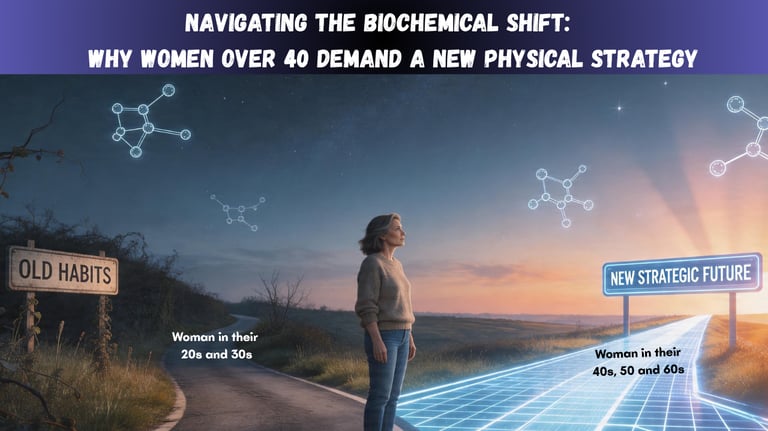
As women approach and pass the age of 40, a profound "biochemical shift" largely driven by perimenopause—transforms how the body responds to exercise, diet, and stress. This period, characterised by fluctuating and declining levels of estrogen and progesterone, demands a strategic pivot from high-intensity training and restrictive dieting toward a lifestyle focused on lifting heavy, prioritising recovery, and managing hormonal balance.
As women approach and pass the age of 40, a profound "biochemical shift"—largely driven by perimenopause—transforms how the body responds to exercise, diet, and stress. This period, characterized by fluctuating and declining levels of estrogen and progesterone, demands a strategic pivot from high-intensity training and restrictive dieting toward a lifestyle focused on lifting heavy, prioritizing recovery, and managing hormonal balance.I speak to you from the "front lines." As a Mental Health Practitioner with over 20 years of experience, I’ve spent my career studying the intersection of neuroscience and behaviour. But I’ve also lived it. In my late 30s, I navigated the early onset of this Biochemical shift while managing Complex Regional Pain Syndrome (CRPS) and vitiligo. I had to choose a different way of living, applying the very neuroscience I taught to my own life.
What I discovered is the foundation of everything we do here at Focus on Emotional Well-Being: Hormones change our bodies, but habits change our epigenetics. Today, let’s dive into Pillar 1: Physical Well-Being, and how we can lead our biology with intentionality.
Understanding the Internal Environment: The Biochemical Shift
In our 40s and beyond, our internal chemistry undergoes a revolution. Perimenopause and menopause aren't just about the end of fertility; they are systemic changes that affect our "second brain"—the gut—and our hormonal regulation.
When estrogen and progesterone fluctuate, they don't just impact our reproductive organs; they influence our mood, immunity, and even how we process nutrients.
The Micro-Habit Strategy:
Prioritise Nutrition for Hormonal Balance: Focus on high-quality fuel that stabilises blood sugar.
Support Your Gut Health: A healthy microbiome is essential for synthesising neurotransmitters like serotonin.
Listen to the Shift: Move from reactive "fixing" to proactive nourishment.
Protecting Your Structure: Movement as Medicine
As we age, our physical structure—our bones and muscles—requires a different kind of investment. We aren't just exercising to "look good"; we are training for longevity and skeletal protection.
Resistance training becomes non-negotiable. Why? Because after 40, bone density can decline rapidly without the stimulus of weight-bearing exercise. Furthermore, our cardiometabolic health—managing heart health and blood sugar—becomes our primary defence against long-term illness.
"The survival maps of our 20s are no longer equipped for the landscape of our 40s and beyond."
Recovery: The Secret to Systemic Regulation
We live in a culture that prizes "hustle," but for the woman over 40, recovery is a high-performance habit. Our nervous systems, often wired for high-cortisol survival from decades of demands, need to be taught how to settle.
Vitality is sustained through the trio of balanced eating, movement, and restorative sleep. Slee is where cellular recovery happens and where inflammation—the silent driver of many midlife aches—is managed.
Biological Security: Your Clinical Safety Net
I often talk about Biological Security. This means shifting from "I'll go to the doctor when it hurts" to a strategic, lifelong commitment to monitoring.
Consistency is your superpower. By integrating annual screenings and proactive monitoring with specialists—like an endocrinologist, a functional trainer, and a nutritionist—you create a safety net that catches issues before they become crises.
Turning Pain into Power
I know it can feel overwhelming. I remember when the dual challenge of chronic pain and hormonal transition felt like a battlefield. But I am living proof that you can influence your biology. It doesn’t happen overnight; it happens through the quiet power of micro-habits—one intentional step at a time.
You have the power to spark neuroplasticity and command your own vitality. Let's stop surviving and start thriving
With grace and vitality,
Elis Castro
Founder, Focus on Emotional Well-Being
⚠️ Disclaimer
I am a mental health professional specialising in Emotional Well-being, but I am not your doctor. Before starting any supplementation or medication, you must consult your physician or nutritionist to undergo blood tests. Supplements can interact with medications (such as antidepressants or blood thinners). This information does not replace professional medical advice. Always seek the guidance of a physician or qualified nutritionist before beginning supplementation.
References & Evidence-Based Resources
National Institutes of Health (NIH): Perimenopause and Menopause Symptoms
British Menopause Society (BMS): Nutrition and Lifestyle in the Menopause
Harvard Health Publishing: Strength Training Builds Bones
Mayo Clinic: Metabolic Syndrome and Women's Health
NHS UK: Exercise as you get older
Cochrane Reviews: Hormone therapy for preventing cardiovascular disease in post-menopausal women
BLOG
Focus on Emotional Well-Being: Holistic Wellness for Modern Woman 40+ © 2026
Created by Elis Castro (UK/USA Mental Health Practitioner and Specialist in Emotional Well-Being)
⚠️ Professional Disclaimer
I am a mental health professional specialising in Emotional Well-being, but I am not your doctor. Before starting or stopping any supplementation or medication, you must consult your physician or nutritionist to undergo blood tests. Supplements can interact with medications (such as antidepressants or blood thinners). This information does not replace professional medical advice. Always seek the guidance of a physician or qualified nutritionist prior to beginning supplementation.

